Webinar with Sarah Robinson
January 22 2026
The profound impact that design has on human experience - physically, emotionally, cognitively, or ecologically - is now well established. And while this experiential and affective turn in architecture is gaining momentum, studio time remains primarily dedicated to the creation of buildings as independent objects with minimal regard for the interactions and impacts those buildings may have on their inhabitants and their surroundings.
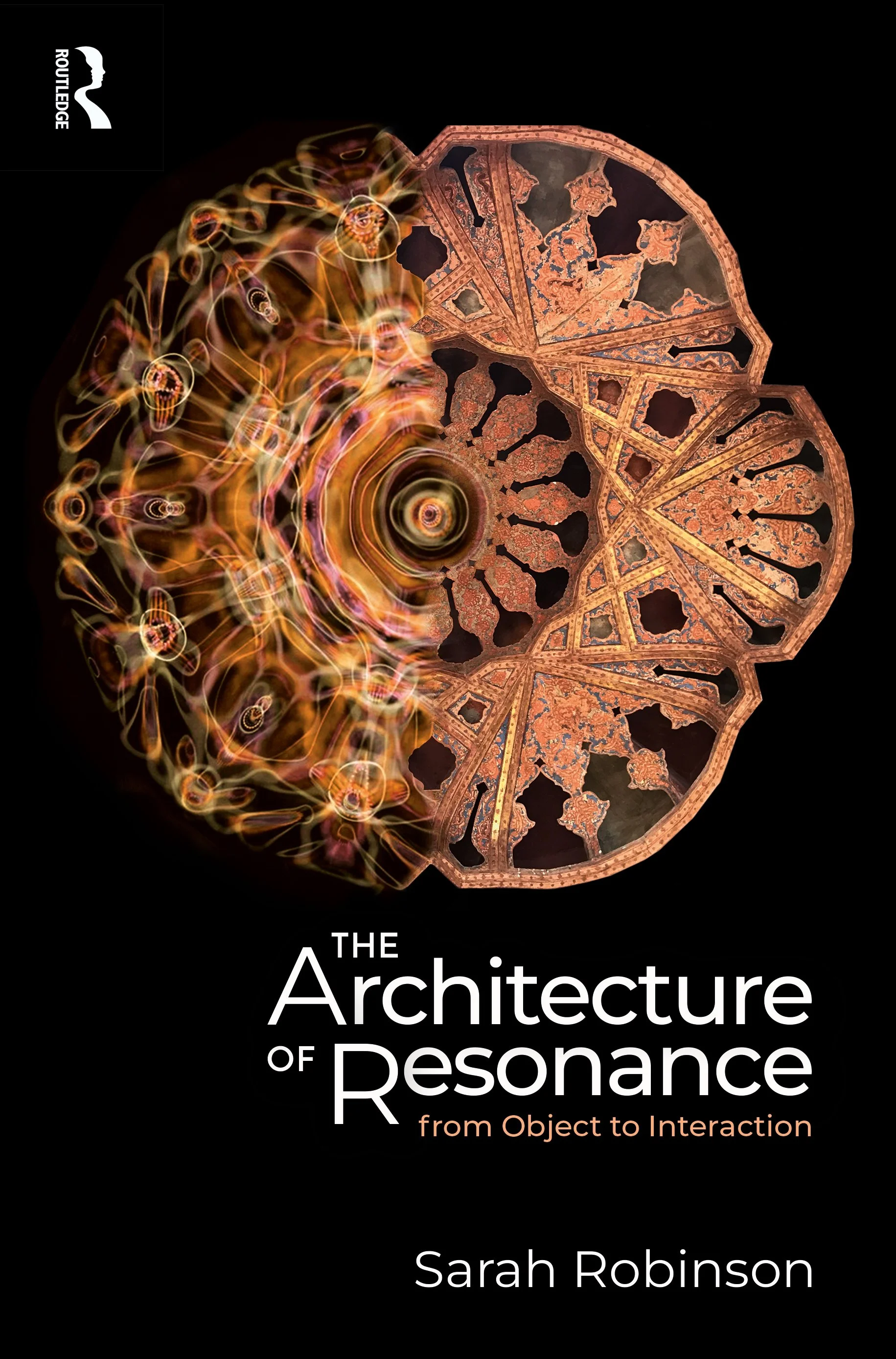
With an engaging preface written by Harry Mallgrave, this book carefully details an alternative for thinking and designing that shifts attention from abstract formalism and object orientation to the creation of dynamic interacting fields of affective, tactile, kinaesthetic, ecological, and social engagement. The book articulates resonance as a model and metaphor for the way we interact with our environments. The word’s literal meaning is to re-sound, implying a surface or receptive body that amplifies and alters the sound - an interdependent relation and process occurring in between. Seven kinds of resonance specific to design are detailed theoretically and illustrated with practical and historical examples. These design strategies demonstrate the possibilities resulting from shifting attention and resources from the longstanding preoccupation with fixed forms towards structuring and supporting dynamic interactive relationships between the built and the natural and between people and place.
If you’d like to learn more, you can find the book through Routledge
The Architecture of Resonance: new book by Sarah Robinson
Speaker’s bio
Sarah Robinson is an architect, writer and educator whose practice is based in Pavia, Italy. Her writing and research is concerned with the many ways that the built environment shapes body, mind and culture. Her books, Nesting: Body, Dwelling Mind (William Stout, 2011), Mind in Architecture: Neuroscience, Embodiment and the Future of Design with Juhani Pallasmaa (MIT, 2015) and Architecture is a Verb, (Routledge, 2021) are among the first works to explore the relationship between design, neuroscience, and human experience.
Holding degrees in both philosophy and architecture, she was the founding president of the Frank Lloyd Wright school of architecture board of governors. She is Adjunct Professor in Architecture, Design and Media Technology at Aalborg University, Denmark, and she is a member of the scientific board of NAAD at IUAV, Venice. Sarah is actively involved in international research and design communities exploring the future of human-centered architecture.